
Updated on March 13, 2026 by canadian immigration experts
Section 1: What Does NOCS Mean in Medical Terms?
The healthcare field has many jobs. We want a system to organize them clearly. The National Occupational Classification System (NOCS) is really used in Canada for this. It groups jobs by what workers do, their skills and their responsibilities. In healthcare, NOCS classifies jobs like doctors, nurses, lab technologists or support staff. Each job gets a code that shows the tasks or skills required.
Knowing what NOCS means in medicine is key for people working in Canada. It helps employers describe jobs. Immigration or job programs use it to check if a person’s education or skills match job requirements.
Section 2: How NOCS Applies to Medical Jobs
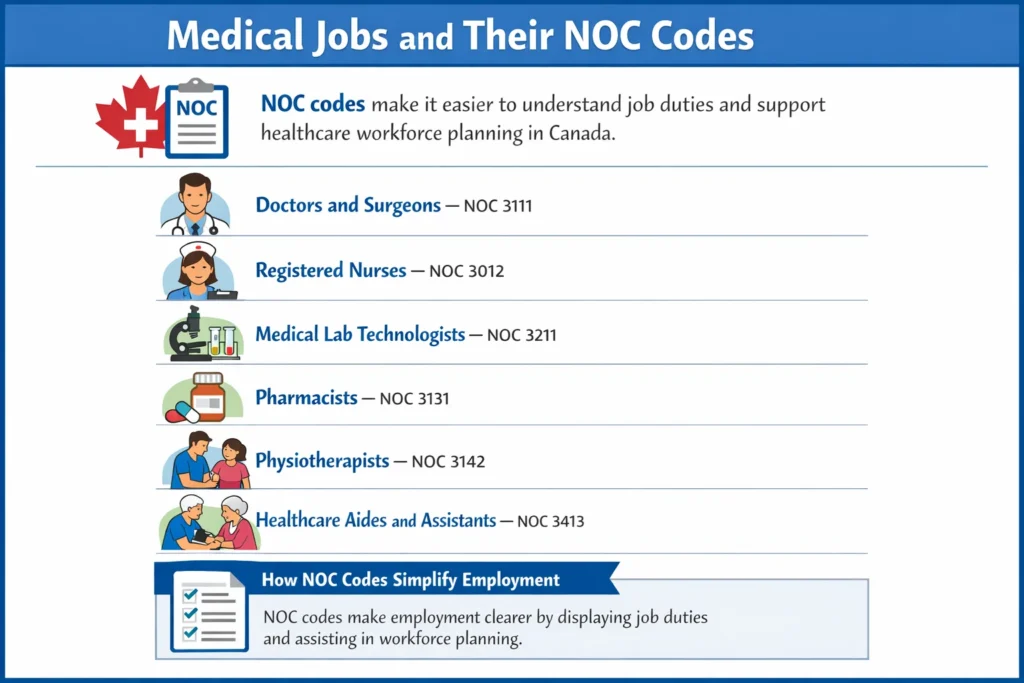
The National Occupational Classification System (NOCS) sorts medical jobs into clear groups. This helps hospitals, clinics and the government understand what every job entails. Each job has a special NOCS code that displays the skills, training and duties required. This helps employers employ the right people and helps workers get where their job fits in healthcare.
Examples of medical jobs and their NOCS codes:
Doctors and Surgeons – NOCS 3111
Registered Nurses – NOCS 3012
Medical Lab Technologists – NOCS 3211
Pharmacists – NOCS 3131
Physiotherapists – NOCS 3142
Healthcare Aides and Assistants – NOCS 3413
NOCS codes make employing simple, display clear job duties or support planning the healthcare workforce in Canada.
Section 3: Importance of NOCS for Immigration
Applicants must select the code that matches their job. Officers check work history against the NOCS description to determine if it matches. For a deeper look at how these codes influence your points and eligibility, explore our comprehensive Canadian Immigration Blog, where we break down the latest Express Entry draws.
Healthcare Jobs in Demand: Nurses, doctors, lab technologists, and healthcare aides are in high demand across Canada.
Why Accuracy Matters: Selecting the wrong code can cause interruptions or complications with the application.
Using the correct NOCS code helps medical workers enter Canada easily and safely.
Section 4: How to Find Your NOCS Code for Medical Jobs
Finding your NOCS code is essential if you work in healthcare or need to work in Canada. The NOCS code accurately describes your job, the skills you want, the training you need, or your duties. Knowing your NOCS code makes applying for jobs, licenses, or immigration quicker and easier. It shows employers and the government that you are qualified for your job.
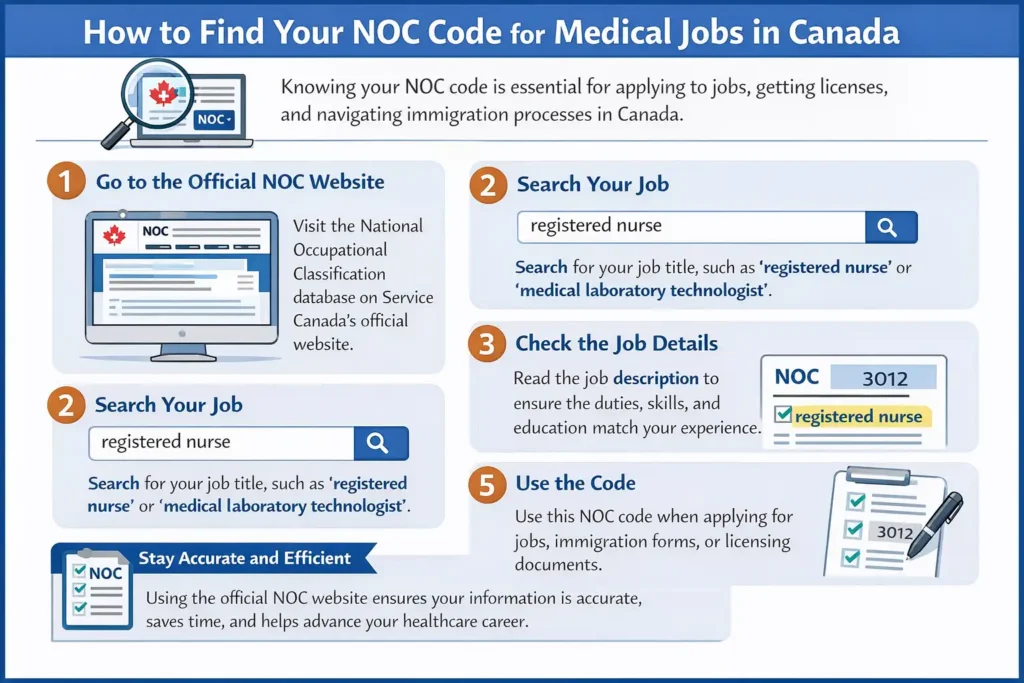
Step-by-Step Guide:
Use the Code: Write this code on job applications, immigration forms, or licensing documents.
Go to the Official NOC Website: Visit the National Occupational Classification database on Service Canada. This is the primary authority for all job classifications in the country.
Search Your Job: Type your medical job title, like “registered nurse” or “medical laboratory technologist.”
Check the Job Details: Read the description. Ensure the duties, skills, and education align with your experience.
Find Your NOC Code: Search for the five-digit code (updated from the older four-digit versions) for your job.
Using the official NOCS website keeps your info correct, saves time, avoids misperceptions and helps your healthcare career grow.
Section 5: Real-World Examples of Medical NOCS Codes
Seeing actual examples can make the NOCS system easier to understand. For instance, the Canada Medical Association often references these standards when discussing physician advocacy and workforce data. Here are some common healthcare jobs and their NOCS codes:
Doctor – NOCS Code 3111
Doctors under the NOCS code 3111 include general and family doctors. They identify patients’ problems, offer treatment, prescribe medication or manage their overall health. In Canada, doctors must complete medical school, complete hospital training and obtain a license before they can work safely and help patients.
Registered Nurse – NOCS Code 3012
Registered nurses (NOCS code 3012) take care of patients in hospitals, clinics and other healthcare settings. They check patients’ health, dispense medication, assist with treatments or work with doctors and other staff. To become a nurse, they must complete a recognized nursing program and obtain a license from their local authority to ensure they can provide safe and effective care.
Medical Laboratory Technologist – NOCS Code 3211
Medical laboratory technologists (NOCS 3211) test blood, urine or other samples to help diagnose patients’ conditions. They use lab machines, check results and help doctors make choices. They typically finish special training in medical lab science and may want a certificate. NOCS codes like 3211 show accurately what this job does, so employers, regulators and immigration officials can know and classify it appropriately.
Section 6: NOCS and Career Pathways in Healthcare
NOCS codes are more than job names—they show a path for healthcare careers. Every code tells the skills, training or tasks required for a job. This helps workers know what to learn to move onward. For example: someone can start as a healthcare assistant and later become a nurse or a medical technologist with additional training. Employers and licensing groups use these codes to plan promotions and pay and to ensure that workers meet national rules.
Key Points:
- NOCS codes help guide learning or growth.
- They display how workers can move to better jobs.
- Employers use them for promotions or pay.
- Licensing groups check codes to meet standards.
- They display long-term career paths and probabilities.
Knowing your NOCS code helps healthcare workers realize how to improve, gain skills or move forward in their jobs securely.
Section 7: Final Thoughts on NOCS in Medical Careers
In conclusion, the National Occupational Classification System is essential for anyone planning a medical career in Canada. It offers clear codes for each healthcare job, helping workers, employers, and the government understand each role and the skills required.
Navigating these codes and the subsequent visa applications can be daunting. If you want to ensure your application is handled with professional precision, contact our Canadian immigration consultants today. Whether you are a doctor, nurse, lab technologist, or healthcare assistant, our team ensures that your experience and skills are appropriately recognized for a successful move to Canada.