Updated on February 24, 2026 by canadian immigration experts
What Is Probate?
In Ontario, you don’t constantly want probate and knowing when you don’t can save time and money. Probate in Ontario is the legal procedure that determines whether a will is valid, who inherits the estate and allows the executor to distribute the estate. But if the property is owned together, like a house with a spouse or if accounts previously have named beneficiaries, like life insurance or retirement funds, probate might not be required. Small estates with little assets can sometimes skip it as well.
Avoiding probate benefits heirs get assets sooner and pay less in fees. Knowing to these situations can help manage an estate stress-free and worry-free for families.
When Is Probate Not Needed in Ontario?
In some cases, heirs can get the deceased person’s money or property without going through the formal probate procedure. Knowing when probate is not necessary can save time, money and stress. The common situations include small estates, joint assets, accounts with named beneficiaries and assets that transfer automatically. Understanding these exclusions helps families switch inheritance more effortlessly.
Small Estates
While probate is often a standard requirement, it isn’t always mandatory. In Ontario, the definition of a small estate was modernized to help families bypass the traditional, lengthy probate process. As of 2026, the Government of Ontario defines a small estate as one having a net value of $150,000 or less. If an estate qualifies, executors can apply for a Small Estate Certificate rather than a full Certificate of Appointment. This streamlined process drastically reduces the administrative burden and speeds up the distribution of assets to heirs. For very small estates such as a $10,000 bank account with no other property many financial institutions may even allow heirs to access funds directly using a simple affidavit of execution or an indemnity agreement, avoiding court filings altogether.
Joint Assets
Assets owned jointly with the right of survivorship go openly to the surviving owner. This can include:
- Joint bank accounts
- Jointly owned houses
- Some investment accounts
It is key that the joint ownership has the right of survivorship. Just having two names on the title is not sufficient.
Beneficiary Designations
Some accounts or policies go directly to the named beneficiary, bypassing probate. These include:
- Life insurance
- RRSPs or RRIFs
- TFSAs with a beneficiary
The bank or company pays the named person upon receipt of the death certificate.
Assets That Transfer Automatically
Some property passes to others automatically, like:
- Vehicles owned jointly
- Accounts with transfer-on-death guidelines
- Pensions or government benefits with named beneficiaries
Knowing these instructions makes it easier for families to get assets fast and avoid delays.
Situations Where Probate May Be Avoided
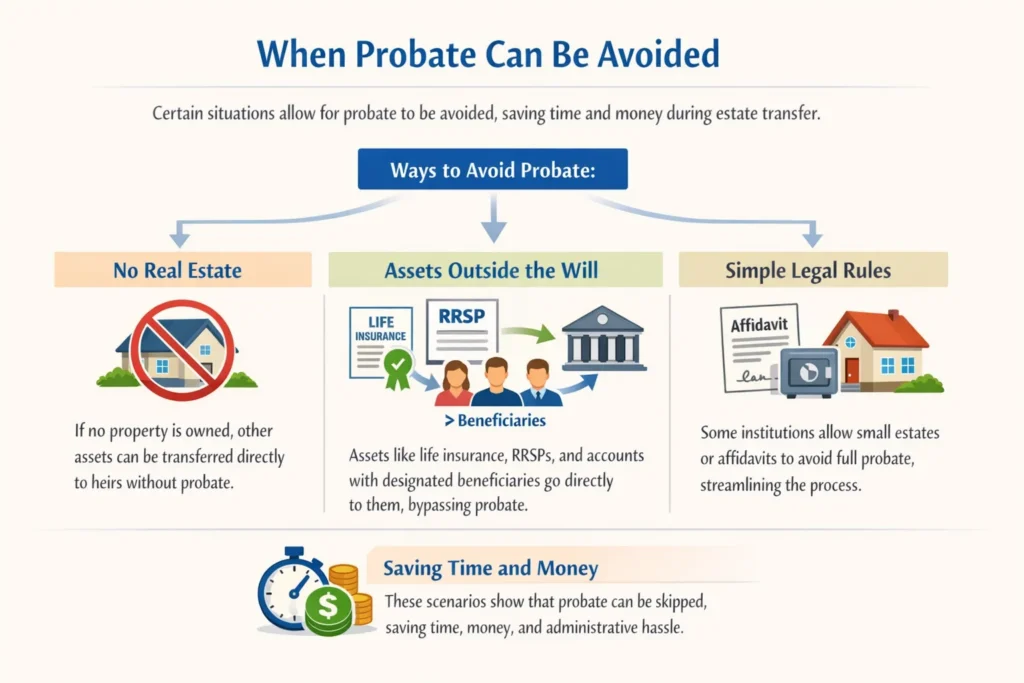
Even if somebody dies and owns things in their own name, probate is not always required. In some cases, heirs can get the assets without going through the full legal procedure. For example, if the person did not own any property, banks and institutions frequently let money or personal items be transferred directly. Assets like life insurance, RRSPs or accounts with named beneficiaries go straight to the people named, without probate.
In some places, like Ontario, there are simple forms or affidavits for smaller estates that allow heirs get assets without applying for full probate. These situations display that probate is not always required and many estates can be settled more quickly and easily.
Key situations where probate may be avoided:
No real estate: If the person did not own property, other assets can be given straight.
Assets outside the will: Life insurance, RRSPs and accounts with named beneficiaries go straight to them.
Simple legal rules: Some institutions allow small estates or affidavits to avoid full probate.
These examples display that probate is not always required which saving time and money.
Alternatives to Probate
Not all estates want to go through court. There are stress-free ways to offer assets to heirs without probate. These approaches save time, money and stress, particularly for small or simple estates. Planning can make things much simpler for families.
Small Estate Affidavit: If the estate is small, heirs can offer a sworn statement showing who has died, what assets there are, and who should get them. Banks or investment companies may offer the money directly after seeing this affidavit and the death certificate.
Simplified Procedures: Some banks and credit unions can offer money to heirs without probate if the estate is small, the assets are only in the deceased’s name and all heirs approve.
Joint Ownership or Beneficiaries: Accounts or property held together, or having named beneficiaries on life insurance, RRSPs, RRIFs, TFSAs or transfer-on-death accounts can pass directly to heirs without going through probate.
These choices make transferring assets quicker, easier and less expensive for families.
Potential Risks of Avoiding Probate
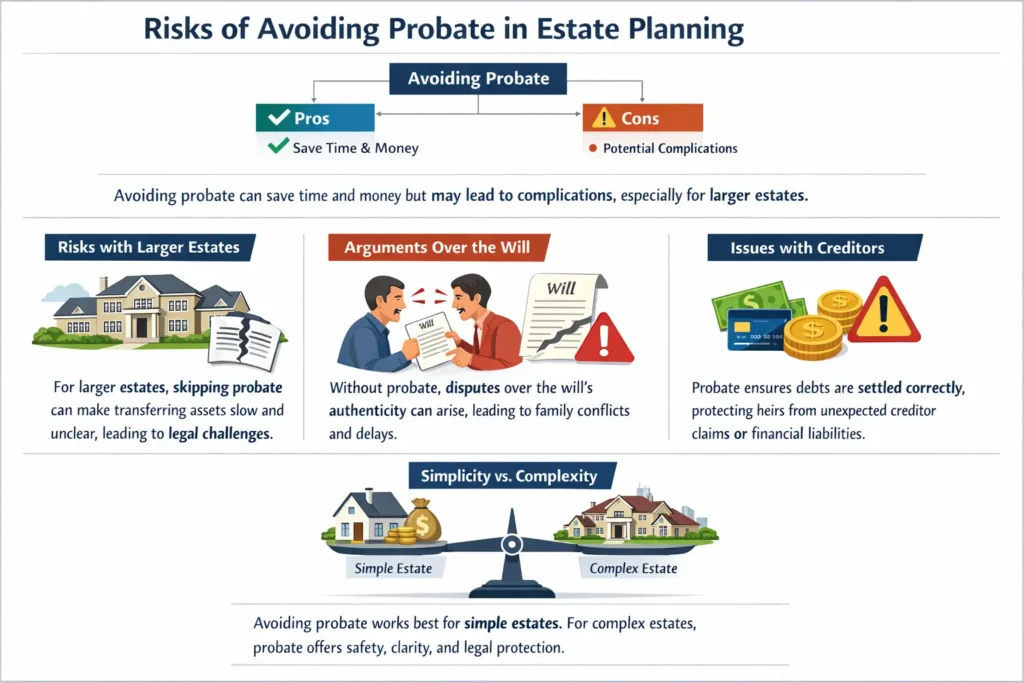
Avoiding probate can save time and money but it also has some drawbacks. It might be all right for small, simple estates, but larger or more complex estates can run into difficulties. Without probate, transferring assets to heirs can get complicated and legal problems may arise. There could also be arguments over the will or claims from people the estate owes money to, which can lead to interruptions and additional costs. Knowing these risks helps you choose if skipping probate is harmless.
Key Risks to Keep in Mind:
Problems with larger estates: If probate is required by law, not doing it can make transferring assets unclear and slow.
Arguments over the will: Probate checks that the will is authentic and helps stop fights among heirs.
Issues with creditors: Probate makes certain debts are handled correctly, protecting heirs from unexpected claims.
In short, avoiding probate is best for simple estates. Complex estates typically benefit from the safety and clarity probate offers.
When You Should Consult a Lawyer
Even if an estate is small or simple, it’s a good idea to consult a lawyer or estate expert in Ontario. A lawyer can guide you gradually, make sure all legal rules are followed, and help avoid errors that could cause interruptions or arguments. Getting timely advice can save time, money and anxiety for everyone involved.
Navigating the complexities of an estate can be overwhelming, especially when trying to determine which assets truly qualify for simplified procedures. To ensure every legal requirement is met without delay, it is often best to seek professional guidance. At Canadian Immigration Experts, we offer a range of other services designed to support families through legal documentation and estate administration. Whether you need help with a Small Estate Affidavit or need to verify the credentials of an international heir, having expert support ensures that all paperwork is completed accurately and accepted by Ontario banks and authorities.
Here are some important reasons to consult a lawyer:
Know which assets need probate: A lawyer can tell you which parts of the estate need formal probate and which can be picked up without it.
Get paperwork right: Even assets that don’t want probate need proper documents. A lawyer ensures that everything is properly completed and accepted by banks or other authorities. Filing the correct paperwork is the most critical step in avoiding delays. You must ensure you are using the latest versions of the Ontario Court Forms under Rule 74.1, which were updated as recently as 2025. A lawyer can help you complete Form 74.1A (Application for a Small Estate Certificate) and navigate the 30-day notice period required before the court can issue your certificate, ensuring you don’t miss any mandatory deadlines that could stall the inheritance process.
Prevent family disputes: Lawyers can give guidance to lessen fights among heirs and protect the estate from creditor claims.
Plan to reduce probate costs: Good legal planning can lower probate costs while following the law.
Handle tricky estates: Estates with many beneficiaries, joint ownership in changed provinces, or unusual assets may require additional steps. Lawyers make sure all is done appropriately.
Speaking to a lawyer early offers confidence that the estate is managed correctly, avoids difficulties and follows all legal instructions.
Final Thoughts
To sum it up, Probate in Ontario helps manage estates but it’s not always required. Small estates, joint accounts, assets with named beneficiaries and some property can often avoid probate, saving time and money. Simple selections such as small-estate affidavits or bank processes, make transferring assets easier and faster. Knowing when probate isn’t required helps families plan and make certain loved ones get their inheritance without problems. It is still smart to talk to a lawyer or estate planner, particularly if there are many assets or heirs. Families in Ontario can move assets easily, avoid more legal steps and make things easier for everybody with good planning.