
Updated on February 20, 2026 by canadian immigration experts
Understanding the change between immigration and emigration is very important as many people move to other countries, mostly for work or study, security or a better life. The two words sound the same, but they mean opposite things. Immigration is moving to a new country, while emigration is leaving your home country. Knowing the right terms helps you understand news, government instructions, visa info and moving options more easily. Learning the difference between Immigration and
The Basic Difference
Basically immigration means coming in and emigration means going out. For a deeper look at the linguistic nuances and mnemonic devices to help you remember these terms, Dictionary.com’s guide on Immigrant vs. Emigrant offers a helpful breakdown for students and professionals alike.
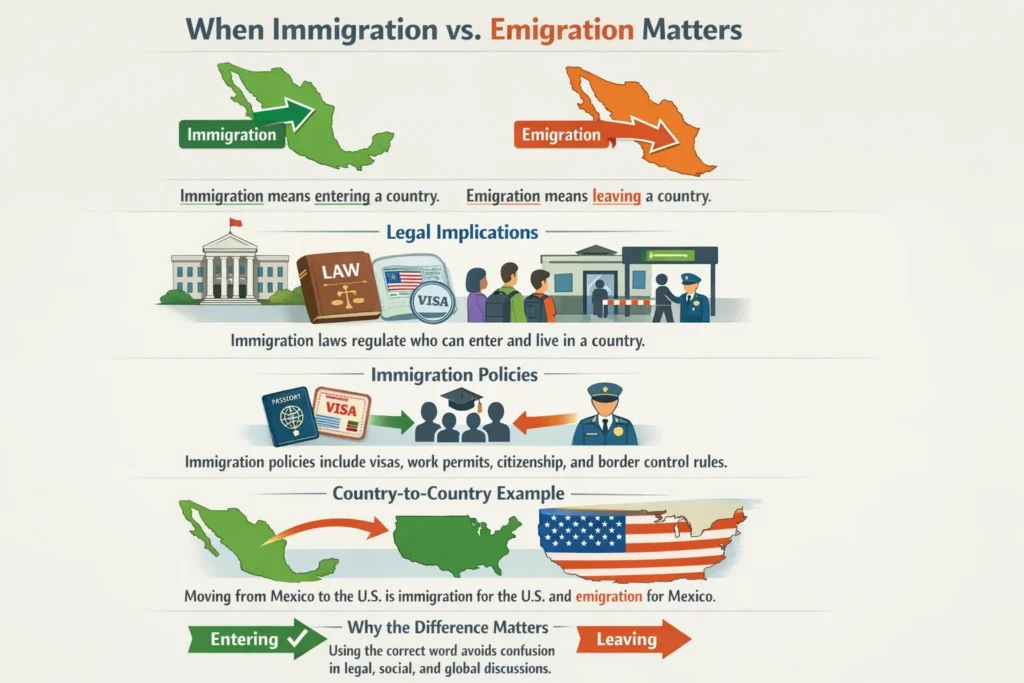
Immigration: Moving into a country
Example: A person from India moving to the U.S. is an immigrant in the U.S.
Emigration: Moving out of a country
Example: The same person leaving India is an emigrant from India.
Basically immigration means coming in and emigration means going out.
When Does the Difference Really Matter?
The change between immigration and emigration is key in daily life. These words are used in laws, government instructions and global talks, so using them correctly is key. Equally, words describe people moving but from different views. Immigration refers to people entering a country. Emigration means people leaving a country. Knowing the change helps stop confusion, particularly in legal and social discussions. It also helps people better understand the migration.
Legal implications: Typically, governments enact immigration laws that basis on people entering the country.
Immigration policies: Instructions about visas or work permits, citizenship and borders are part of immigration systems.
Impact on global demographics: Emigration is key when countries discuss people leaving, job shortages or brain drain.
Country-specific examples: When people move from Mexico to the U.S. then it is immigration for the U.S. and emigration for Mexico.
Using to the correct word makes thoughts clearer and easier to understand.
Real-World Examples of Immigration and Emigration
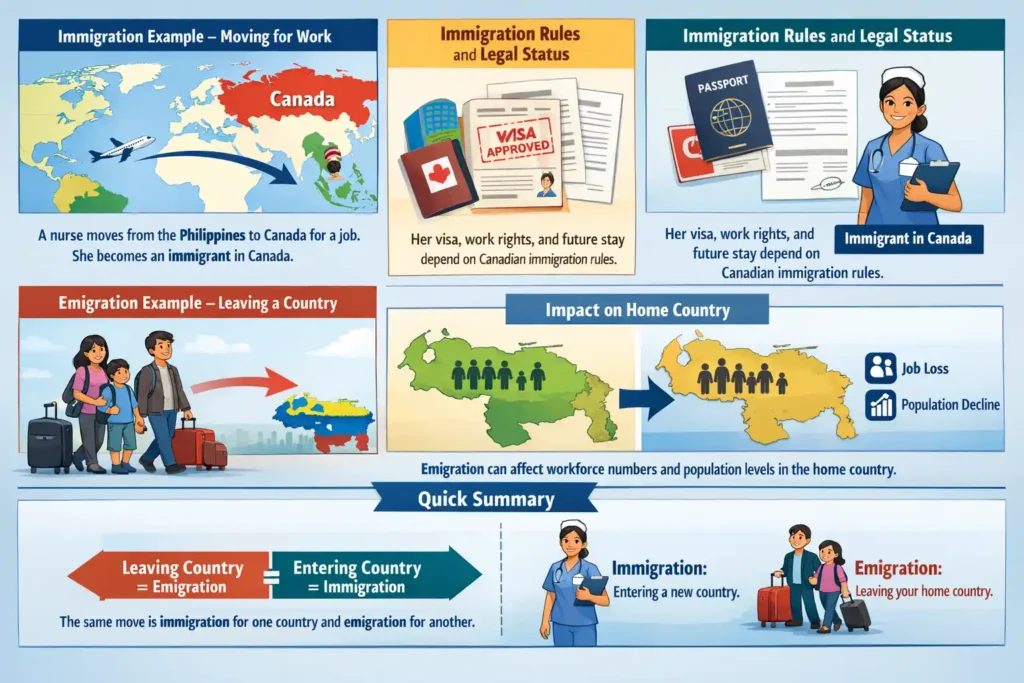
For instance, a nurse from the Philippines moves to Canada after getting a job there. She is an immigrant in Canada. Her visa or work rights and future stay depend on Canadian instructions. If you are a healthcare professional looking to make this journey, understanding the specific requirements for nurse immigration to Canada is vital to ensuring your transition is legal and successful.
Emigration is when people leave their own country to live elsewhere. For example, a family leaves Venezuela due to money or safety problems. From Venezuela’s view, they are immigrants. Leaving to the country can disturb the local population and employees. Even if they become immigrants elsewhere then their leaving is called emigration. Governments talk about emigration when experts leave or the population shrinks.
Immigration example: A nurse moves to Canada for work and becomes an immigrant.
Emigration example: A family leaves Venezuela, which displays emigration and population loss.
Why Use One Term Over the Other?
Immigration and emigration mean different things depending on who is talking and what they are focusing on. Immigration is about people moving into a country. It’s frequently linked with new prospects or jobs, schools and growth. Emigration is the movement of people out of a country. It often displays what a country is losing or the problems people face. Using to the correct word makes your meaning clear and shows respect particularly in schoolwork, news or legal writing.
Language and Media Use
News or governments and organizations typically use term “immigration” when speaking about people arriving. They say ’emigration’ when talking about people leaving often because of complications or fewer opportunities at home.
Perspective Matters:
- Countries are getting people talk about immigration.
- Countries are declining and people are talking about emigration.
- Using the right word makes your writing correct and clear.
Clear words help everybody know who is moving and why.
Can Someone Be Both an Immigrant and an Emigrant?
Yes, at the same time a person can be an emigrant and an immigrant. These words tell us the direction somebody moves, not who they are. For instance, if a student leaves Pakistan to study in the UK, they are an emigrant from Pakistan and an immigrant to the UK. Governments and researchers use these words liable to the country they are watching. Knowing to the change helps people understand changes in jobs, schools and populations. It makes it easier to study how people move around the world.
Why Understanding the Difference Actually Matters?
Understanding the difference helps people switch between countries easily. It is also critical for tracking official government goals, such as the Government of Canada’s 2026-2028 Immigration Levels Plan, which outlines how many new residents the country expects to welcome over the coming years
For individuals, knowing whether you are emigrating or immigrating affects laws, taxes and access to services. This distinction is especially important when you are entering a country on a non-permanent basis. For more details on shorter stays, you should consult our guide to visiting Canada with a Temporary Resident Visa (TRV), which explains how entry rules differ from those of permanent immigrants.
Final Thoughts
To conclude, immigration and emigration both refer to people moving but from different perspectives. Immigration is moving to a new country while emigration is leaving your own country. Neither word is incorrect but it depends only on how you look at it. Knowing to the change makes things easier to understand, whether you are reading the news, planning to move or only using the correct word in a sentence. Lots of people get these words mixed up at first but when you know the idea then it is simple. You can now easily tell the change between immigration and emigration and use the accurate word accordingly.