
Updated on February 20, 2026 by canadian immigration experts
Nursing careers in Canada are common for students and foreign-trained professionals. Nurses are needed because the population is aging and there are staff shortages. This makes nursing stable and in demand. Nursing pays well, offers benefits and provides job security. However, it can be hard work. Nurses often work long shifts, care for many patients and face emotional stress. Before starting, it is important to know about salaries or extra pay, taxes and the chances to grow your career.
This guide looks at the key nursing roles in Canada or salary details (particularly in Ontario), high-paying jobs like Agency nursing and travel nursing opportunities plus
the money side of nursing.
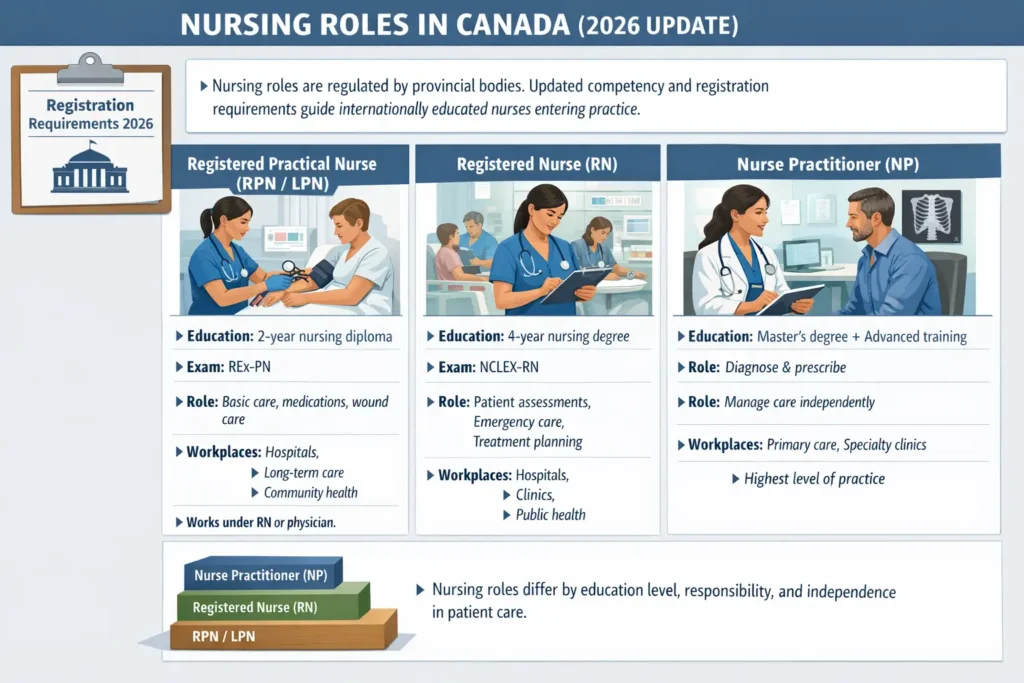
Overview of the Three Nursing Roles in Canada
Navigating these roles requires a clear understanding of the regulatory landscape, which has become more streamlined in 2026. For those moving from abroad, the College of Nurses of Ontario (CNO) Registration Guide provides the most up-to-date requirements for internationally educated nurses, including the new ‘Transition to Practice’ competency updates that took effect this year.
Registered Practical Nurse (RPN) / Licensed Practical Nurse (LPN)
You must have a 2-year college diploma and pass to REx-PN exam. RPNs/LPNs give basic care like checking vital signs or giving medicines, wound care and assisting with everyday activities. Some tasks, like certain IV medications, require extra training. They typically work with RNs or doctors in hospitals, long-term care, rehab and community health.
Registered Nurse (RN)
Registered Nurses in Canada require a 4-year nursing degree (BScN or BN) and must pass the NCLEX-RN exam to practice. RNs provide advanced care such as assessments, planning treatment, and handling emergencies in settings like hospitals, clinics, and public health. For international professionals, navigating the licensure and visa process is a critical first step; our specialized support for nurse immigration to Canada can help streamline your transition into the Canadian healthcare workforce. Notably, as of early 2026, Registered Nurse salaries in Ontario under the ONA union agreements have seen steady increases, with starting rates now exceeding $41 per hour for many hospital roles.
Nurse Practitioner (NP)
This is the highest nursing role. You need a Master’s degree and specialized training. NPs can perform many tasks similar to those of doctors such as diagnosing patients, prescribing medication and managing care independently.
Salary Breakdowns by Role (Ontario Focus)
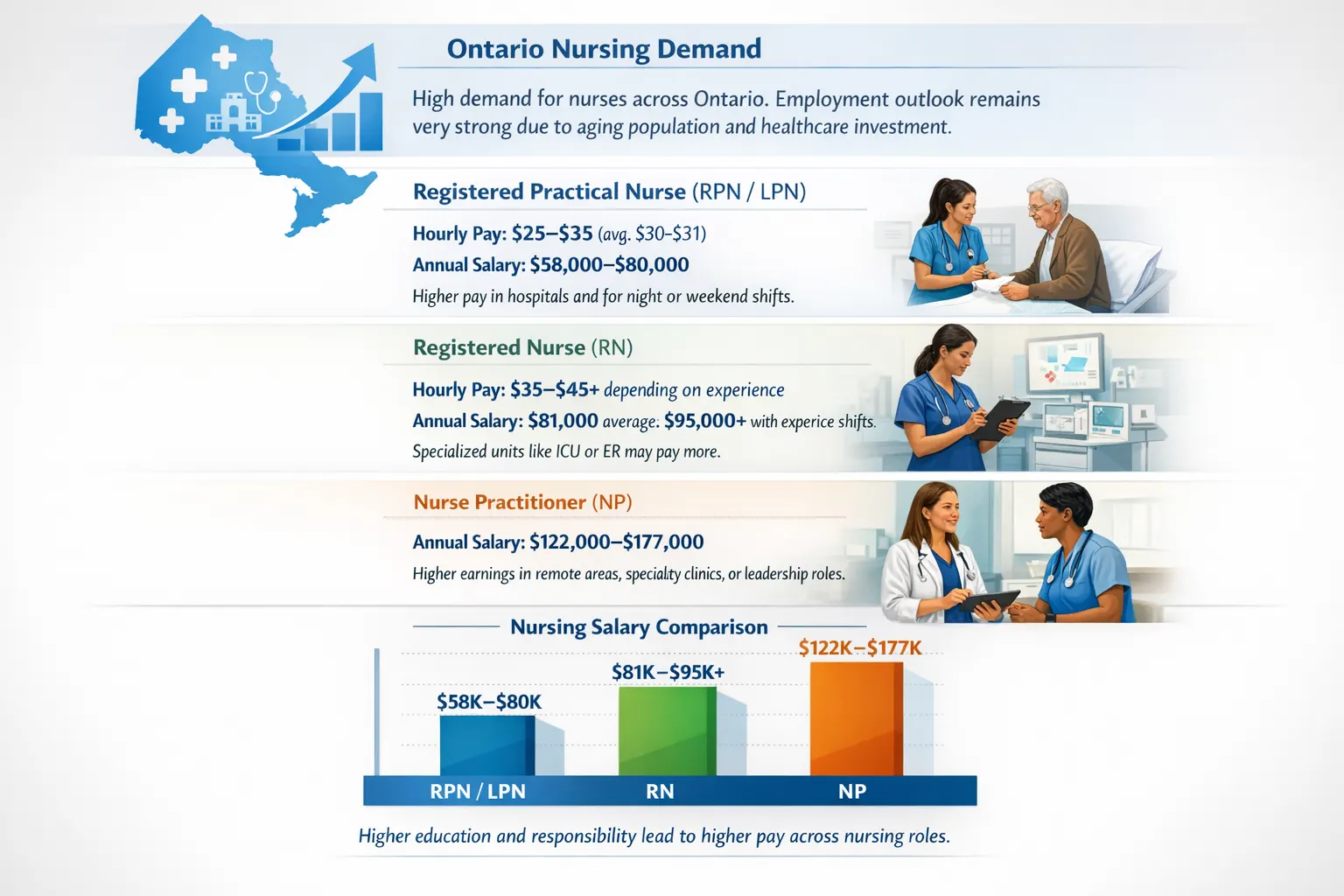
These figures reflect the high demand across the province, but it is important to stay informed on local shifts in the labor market. According to the Government of Canada’s 2024-2026 Job Bank Outlook, the employment outlook for Registered Nurses remains ‘Very Good’ across every region of Ontario. This sustained demand, driven by an aging population and significant healthcare infrastructure investments, ensures that nursing remains one of the most stable and high-paying career paths in the country.
Registered Practical Nurse (RPN) / Licensed Practical Nurse (LPN)
Hourly pay: $25–$35, typically around $30–$31. Pay goes up with practice, additional training and the type of workplace. Hospitals typically pay more than long-term care. Nights and weekends can offer additional money.
Yearly salary: $58,000–$80,000. Extra shifts receive full pay.
Registered Nurse (RN)
Hourly pay: Starts around $35–$36; expert RNs can earn over $45. Distinct units like the ICU or ER may pay more.
Yearly salary: About $81,000 on average can go over $95,000 with more shifts or senior roles.
Nurse Practitioner (NP)
Yearly salary: $122,000–$177,000. Higher pay for remote areas, specialty clinics or leadership jobs.
Notes: NPs earn the most as they have innovative training and more duties.
The “Big Bucks”: Agency Nursing and Travel Nursing
While agency and travel nursing offer high flexibility and pay, many tech-savvy nurses are also exploring roles in digital health and tele-nursing. If you are interested in how technology is reshaping the professional landscape, check out our guide on BC immigration tech to see how innovation is driving new pathways for skilled workers in Canada.
Agency Nursing
Agency nurses work through private agencies, not as permanent hospital staff.
Benefits include:
- Higher hourly pay than permanent hospital jobs
- Flexible hours and shift choices
- Ability to select contracts that suit their schedule
- Pay can increase quickly during staff shortages.
Throughout COVID-19, some nurses made up to $130 per hour. Agency jobs pay well, but they may have less job safety, fewer benefits, and more frequent changes of assignments.
Travel Nursing
Travel nurses work temporary jobs in different locations, often in remote or small towns.
Benefits include:
- Higher pay than most local nursing jobs
- Covered housing and travel costs
- Bonuses for completing contracts
- Experience working in places like Northern Ontario.
Travel nursing can increase income, but one wants flexibility and comfort with new places. For nurses who need new experiences, agency or travel nursing offers more money and career growth. It’s one of the best techniques to earn in nursing.
Understanding Premiums and Benefits
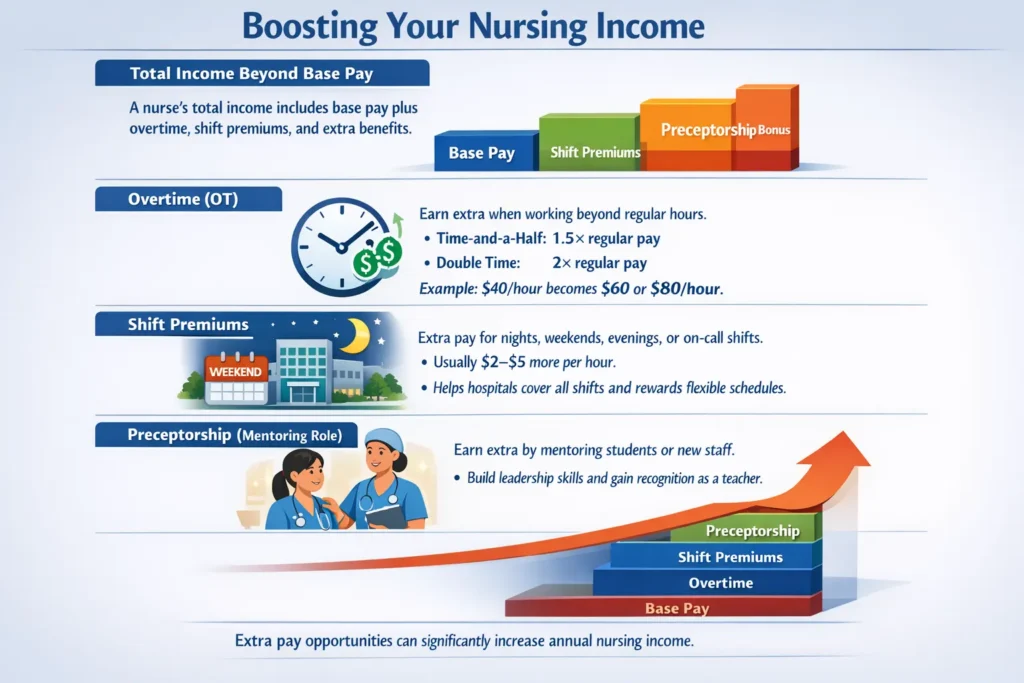
A nurse’s base pay is only one part of their total income. Nurses can earn more through overtime, shift premiums, mentoring students and other benefits. Understanding to these extra payments helps nurses plan their schedules, finances, and careers. In some cases, part-time work pays higher cash immediately but may offer fewer benefits.
1: Overtime (OT)
Overtime lets nurses earn extra money when hospitals need more staff. It usually pays more than regular hours. Common rates are: Time-and-a-half: 1.5 times regular pay, Double time: 2 times regular pay.
For example, a nurse earning $40/hour could make $60/hour on time-and-a-half or $80/hour on double time. Working a few additional OT shifts each month can add a lot to yearly income. Overtime also helps hospitals when they are busy or short on staff. Lots of nurses use OT to earn more money and reach their financial aims sooner while still helping patients.
2: Shift Premiums for Nurses
Nurses can earn additional money known as shift premiums, for working certain hours. This includes night shifts or weekends, evenings or being on-call. These shifts typically pay $2–$5 more per hour. Some nurses like these shifts as they can have more flexible schedules or fewer daytime hours. The work may be harder or at unusual times but the higher pay is worth it. Over time, this extra money can actually add up. Hospitals give these premiums to ensure that all shifts are covered and patients get care. Nurses who need to earn more can select shifts with premiums to increase their pay while still managing work and personal life.
3: Preceptorship
Preceptorship allows nurses help students or new staff and get more rewards. Nurses who do this work can earn additional pay and be recognized as teachers. It helps them share information, gain leadership skills and learn how to teach. Being a preceptor can make work more exciting and satisfying as nurses see that how they support others grow.
Key benefits include:
- Extra pay for teaching
- Recognition as a workplace mentor
- Chance to develop leadership and communication skills
- Valuable experience for career progress.
Preceptorship supports nurses in earning more, learn new skills and enjoying their job more.
4: Benefits for Full-Time Nurses
Full-time nurses get more than basic pay. They also receive benefits that help them stay healthy, manage stress and feel secure. These benefits make work easier, reduce stress and offer long-term stability. Over time, these benefits become very valuable and provide support beyond just the regular salary.
Dental and vision coverage: Supports with teeth and eye care.
Health and mental health support: It offers doctor visits, counseling and wellness help.
Paid vacation and sick days: Provides time off to rest and recover.
Pension plans: Save money for retirement and the future.
These benefits make a nursing job more secure or rewarding and safer in the long run.
5: The “Part-Time Hack.”
Some part-time nurses get a portion of their benefits as extra cash (for example, 14%). This means more money up front, but:
They must pay for their own health insurance
No employer pension contributions.
It can be good in the short term but it’s less secure in the long term.
Reality Check: Taxes and Comparisons
If you need to work as a nurse in North America but it’s key to look at more than only salary. Nurses in the United States typically earn more money and pay less in taxes so they take home more pay. In Canada, nurses also get good salaries but taxes are higher particularly for those earning a lot. Canada uses a progressive tax system which means higher earners pay a greater share of their income in taxes. These taxes support public healthcare and other services. Before selecting where to work, nurses should think about the change between what they earn and what they really keep.
US vs. Canada – Key Points:
US Nurses:
- Make greater salaries
- Pay lower taxes
- Have more money
Canadian Nurses:
- Salaries are good but taxes are higher
- High earners pay more due to progressive taxes
- Taxes fund healthcare, pensions and social benefits
Although Canadian salaries look high but taxes can take a great part of the pay. Knowing both earnings and taxes helps nurses make smart career selections.
Final Thoughts: Is Nursing in Canada Worth It?
In conclusion, nursing in Canada is a career that offers purpose, stability, and good chances. The Registered Nurse salary in Ontario is durable and the Nurse Practitioner salary is very competitive. Nurses also get pension plans, opportunities to specialize and flexible work choices like agency or travel nursing that can increase income. Nursing can be hard work. High taxes, busy schedules and emotional stress are actual challenges. It takes dedication, energy and patience to succeed.
If you enjoy assisting people and need a career that is steady and growing, nursing in Canada can be very satisfying. It might not make you rich fast but over time, the good pay profits and satisfaction make it worth it. Knowing to challenges and rewards equally helps future nurses make smart selections and build a continuing or meaningful career in Canada.