
Updated on February 25, 2026 by canadian immigration experts
Being investigated by the police can feel frightening and it’s usual to wonder if they are watching you. Police typically don’t tell you when they are investigating but there are some symbols that display they might be interested. This guide clarifies to the main warning signs of a Police Investigation in Canada such as unusual surveillance, sudden questions or odd messages or visits. Spotting these signs in time can help you stay calm, or avoid doing something that could make things worse and protect your rights. Knowing to what to watch for and when to talk to a lawyer can help you handle a Police Investigation in Canada more securely and surely.
What Does Being Under Police Investigation Mean in Canada?
Being under a police investigation in Canada means the police are gathering facts to determine whether a crime occurred and if you are connected to it. An ‘investigation’ is simply the collection and review of relevant information. Crucially, being investigated does not imply guilt or guarantee that charges will follow; it only means authorities are examining the facts. Since these inquiries can last for months before a resolution, knowing what to expect is vital for protecting your rights.
For immigrants and temporary residents, an investigation carries extra weight. Beyond the immediate legal concerns, a record of police interaction can impact your future applications. For instance, if you are currently in the Express Entry pool, you must be aware of how police certificates and Express Entry completeness checks work. In 2026, IRCC requirements are stringent; an ongoing investigation or an unresolved record can lead to significant delays or the rejection of your profile if background checks cannot be cleared.
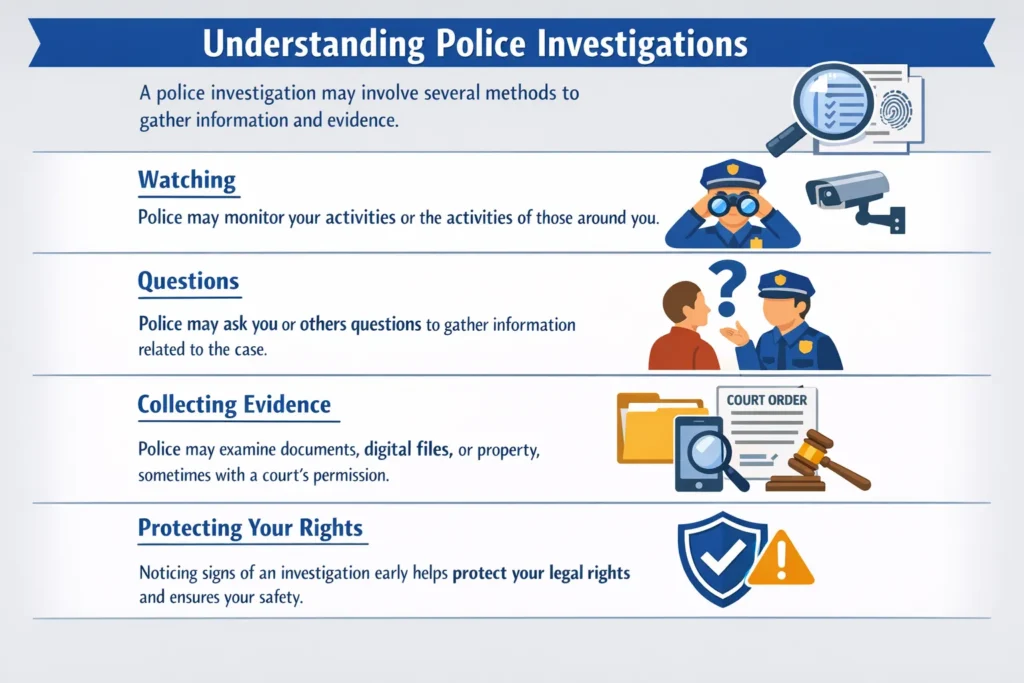
A police investigation may include:
Watching: Police may monitor your activities or those of the people around you.
Questions: Police may question you or others for info.
Collecting evidence: Police may examine documents, digital files or property sometimes with a court’s permission.
Noticing to the signs of an investigation promptly can help you stay safe and protect your legal rights. In Canada, your fundamental protections are enshrined in the Canadian Charter of Rights and Freedoms. These rights are not just suggestions; they are constitutional requirements that law enforcement must follow. Under Section 7, you have the right to life, liberty, and security of the person, which includes the right to remain silent. Furthermore, Section 8 protects you from ‘unreasonable search or seizure,’ meaning police generally cannot search your home or phone without a valid warrant signed by a judge. Understanding these sections of the Charter is the first step in ensuring you are treated fairly by the justice system.
Signs You May Be Under Police Investigation
Police try to investigate quietly but there are subtle signs that they are watching you. Noticing to these signs can help you stay careful. One small event may mean nothing but many signs together could be key.
Unusual Surveillance: You might see to same people or cars near your home or work, or notice someone taking photos, notes or watching your online activity.
Questioning or Visits by Police: Officers may ask simple questions at your home or work, call you continually or talk to your friends or coworkers about you.
Changes in How People Act Around You: Friends, neighbors or coworkers may unexpectedly act distant, cautious or avoid speaking openly.
Unexpected Property Inspections: Police may ask to inspect your property including your documents, devices or personal items, without a clear reason.
Strange Calls, Emails, or Visits: The unfamiliar people contacting you with private details or asking to meet weirdly could be a warning.
Paying attention to these signs and keeping notes can help you stay safe and get guidance if required.
What to Do If You Think You’re Under Investigation
If you think the police or authorities might be checking on you or stay calm and be cautious. Panicking or acting too fast can make things worse. Your key goal is to protect yourself and recognize your rights. Doing to the right things early can prevent mistakes and ensure your side of the story is heard. Don’t confront anybody or share info online or with people who don’t know the law.
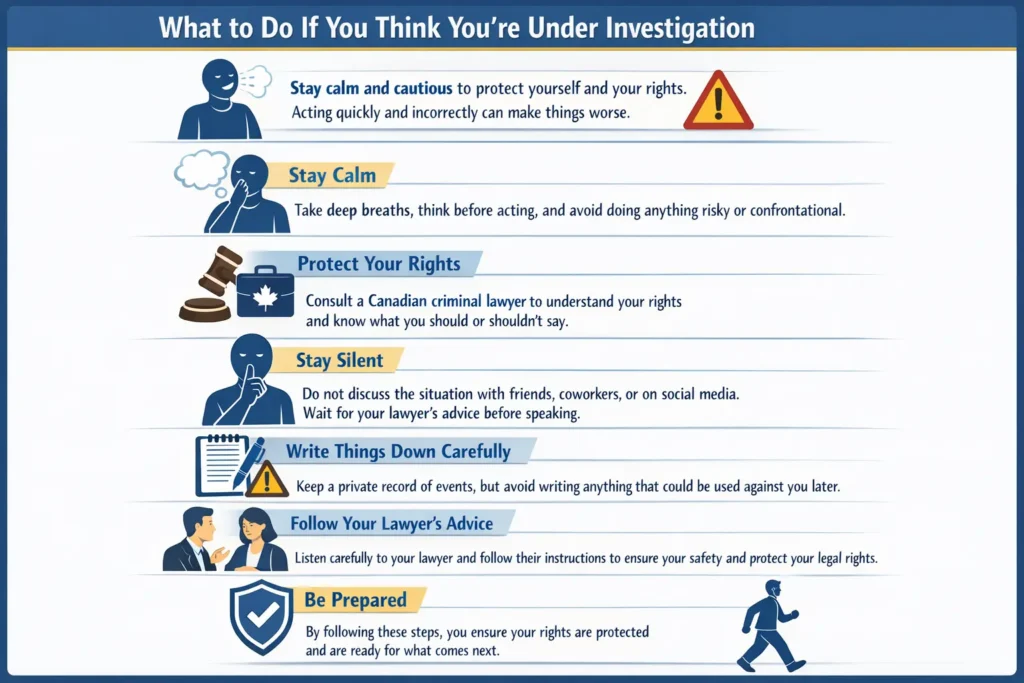
Key steps to follow:
Stay calm: Take deep breaths and think before you act. Do not do something risky or fight with anybody.
Protect your rights: Talk to a Canadian criminal lawyer. They will clarify your rights and tell you what you should or shouldn’t say.
Stay silent: You don’t need to discuss the situation. Don’t talk over it with friends, coworkers or on social media until your lawyer says it’s all right.
Write things down carefully: Have a private record of what happens but don’t make something that could be used against you.
Follow your lawyer’s advice: Listen to your lawyer and do what they say correctly to stay safe.
Doing to these steps helps you stay safe, recognize your rights and be ready for what comes next.
Legal Rights You Have During an Investigation
Being investigated in Canada can be frightening and stressful but knowing your rights can help you stay calm and harmless. The law protects you so that you are treated honestly and your personal info and freedom are respected. Using your rights does not mean you are guilty but it only helps you avoid trouble and make smart selections. Knowing to your rights also allows you to protect your privacy and get help from a lawyer when dealing with the police or other authorities. Keep calm and use your rights to make the procedure easier.
In Canada, your fundamental protections are enshrined in the Canadian Charter of Rights and Freedoms. These rights are not just suggestions; they are constitutional requirements that law enforcement must follow. Under Section 7, you have the right to life, liberty, and security of the person, which includes the right to remain silent. Furthermore, Section 8 protects you from ‘unreasonable search or seizure,’ meaning police generally cannot search your home or phone without a valid warrant signed by a judge. Understanding these sections of the Charter is the first step in ensuring you are treated fairly by the justice system.
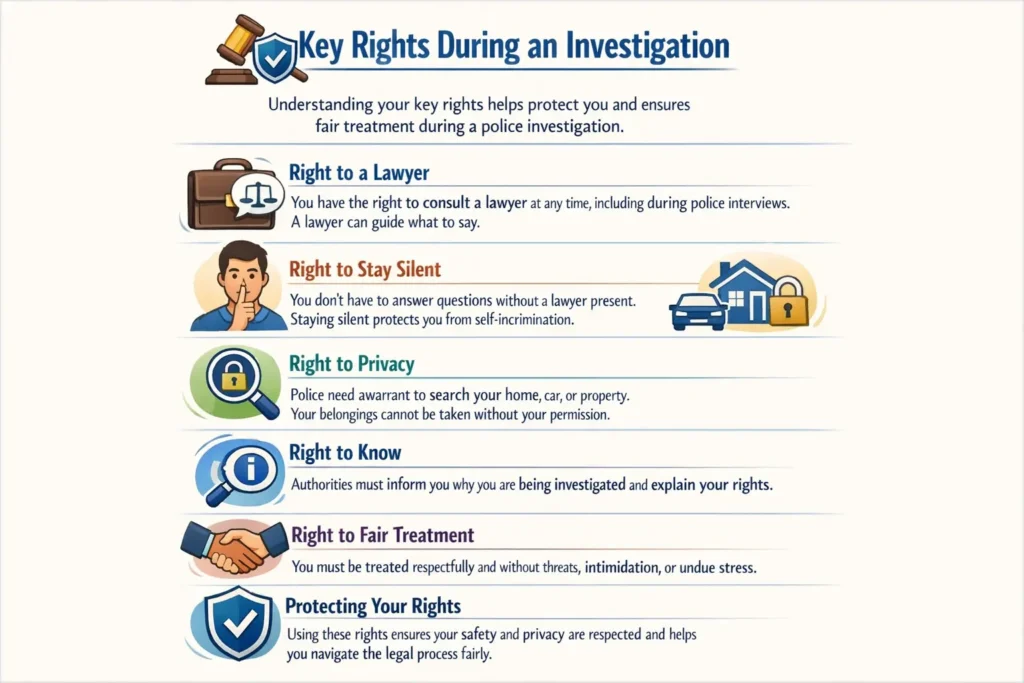
Key rights include:
Right to a lawyer: You can consult a lawyer at any time. A lawyer can go with you to police interviews and guide you on what to say.
Right to stay silent: You don’t have to react to questions without a lawyer. This helps you avoid saying something that could be used against you.
Right to privacy: Police typically need a warrant to search your home, car or personal property. They cannot take your property without permission.
Right to know: Authorities must obviously tell you why you are being investigated and what your rights are.
Right to fair treatment: You must be treated courteously, without threats or stress.
Using to these rights protects you or helps your case be fair and confirms that your safety and privacy are respected.
When Should You Contact a Lawyer?
Knowing when to call a lawyer is essential. A lawyer can help protect your rights and prevent complications that could lead to financial hardship. Some situations require fast action, and understanding the warning symbols can make a big change. Talking to a lawyer on time helps you switch investigations or legal questions securely, without making mistakes that could cause more concern.
Immediate signs to look out for
If you receive a formal notice of an investigation are arrested or are detained by police then contact a lawyer immediately. These situations have severe rules and deadlines. Acting timely ensures your rights are protected and prevents mistakes that could make things worse.
How a lawyer can help
A lawyer guides you through the legal procedure. They can tell you which documents or information are safe to share, speak for you all through questioning and deal with authorities on your behalf. The lawyers support you in handling law enforcement safely and making smart choices so you don’t accidentally cause more problems.
When to take action
It’s best to contact a lawyer as soon as trouble starts. Early help gives you a clear plan or protects your rights and reduces the chance of mistakes that could complicate your situation. More, letting guidance quickly frequently leads to better effects.
Next Steps and Conclusion
To sum up, knowing the signs of a possible investigation and how to respond is essential to protecting your rights. Keep a record of unusual calls, visits, or messages, avoid discussing the matter with others, and contact a lawyer immediately. Small warning signs should never be overlooked; acting early helps you stay informed, make better choices, and avoid costly mistakes.
Being investigated does not always mean you will face charges, but it is best to be prepared. Legal experts in Canada advise taking proactive and cautious steps rather than waiting for the situation to escalate. Understanding your rights and maintaining a clear track record will help you navigate the situation with confidence.
Ultimately, protecting your clean record is about more than just avoiding immediate charges; it is about protecting your future in this country. Many individuals work through these challenges with the goal of one day reaching the final stage of their journey: Canadian Citizenship. Since an active investigation or a criminal record can legally bar you from naturalization, taking the right legal steps today ensures that your path to becoming a citizen remains open. By staying alert and acting wisely, you can protect your status and respond appropriately without causing further complications.